Poetics
Glasgow Improvisers Orchestra · Ernesto Rodrigues · Guilherme Rodrigues
Reviews
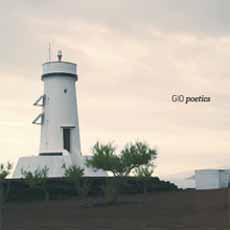
Improvising Orchestras are odd animals. I have to say that until my very recent experience with the 40 musician strong London Improvising Orchestra at the Freedom of the City festival the times I have witnessed large group improvisations haven’t been that inspiring. I had seen the London group early on in their existence, and had also witnessed a large-ish Butch Morris group a while back, but they had always seemed an anchorless, seething mass, not to mention a mess of uncoordinated sound. The little glimpses I had heard of the LIO on disc did little to win me over either, but seeing them live up close recently was a great experience, forty musicians working together with only the overall music in mind, a wonderful show of an ego-less collaborative community working together in full flight. Today I have been listening to a CD on the Creative Sources label by the Glasgow Improvisers Orchestra, just released, titled GIO poetics, Their fourth or fifth disc I think, and I find myself coming back to the task of trying to find something tangible to enjoy in a recording of big-band improvisation. With the exception of Neil Davidson’s electric guitar all of the twenty musicians involved on this recording play acoustic instruments. As far as I know all of them bar two are resident of Glasgow or its close-by neighborhoods. The two exceptions are Ernesto and Guilherme Rodrigues, from Lisbon, Portugal who also run the Creative Sources label. There are four (delightfully titled) tracks on the album. The first three of them are all free improvisations, the last a loosely instructed piece written by Raymond MacDonald. There are obvious problems with recording twenty musicians at once in the same room. Unless the resources can be found to find twenty mics and a really big room to separate the musicians from one another the recording will always seem to have certain musicians foregrounded over others, and although this particular disc is as well recorded and mastered as it probably ever could be there is a sense of being in the audience with the musicians stepped back away from you here. The two drummers and the brass instruments seem a little far off, but as they allow quieter instruments to step into the foreground this is probably a good thing. So what is the music like? Well as the orchestra is only half the size of its London counterpart there is more room to breathe than I am used to hearing. The London group tend to lean towards more semi-composed performances, with the improvisations they do undertake wandering into a mass of dense sound, but here there is just enough room left at any one time to be able to hear through the music and out the other side. Though the sounds do layer upon each other often there are few completely dominant sounds and it is possible to listen to the music as a linear stream of sounds rather than trying to hear into a seemingly impenetrable mass. There is, as you might expect a lot of detail and plenty of twists and turns, with certain instruments taking their moment to lead the music along and probably never more than ten people really playing at once. (I may be wrong with this supposition but it feels that way) As with all improvisations involving large groups though the music never quite pins itself down in one direction, or follows one common thread through a particular track, as so many voices tend to lead the music into one tumbling, constantly evolving stream of sounds that could go anywhere at any one time. The three improvisations here are a nice listen, something continually interesting to immerse your ears in, but perhaps lacking the focus that a more structured approach provides a mass orchestra. Those track titles though; Apricot Path, Dog’s got my money and I’m sorry but I’ve fallen. Where did they come from?! The fourth track here, called Distributed Talk then is quite different. It is made up of four short improvisations held apart by short silences. The first of these mini pieces is just a minute long and is a scratchy, rubby textural vignette I like a lot, but as soon as it comes it goes and is replaced by a further minute-long piece, this time more rambunctious and lead by MacDonald’s jazzy sax. There then follows a three minute segment that shows how large groups can really work well as it layers complementary sounds behind the violin and cello of the two Rodrigues. Each of these short parts are played by only certain sections of the orchestra, so each has its individual characteristic dependent on the musicians involved. The final part is a nervous affair, little snippets of voice punctuate a scrabbling guitar and scratchy percussion. I like this more controlled final piece, and would I think enjoy an entire album played in this manner. Still a nice record altogether, and wrapped in a lovely sleeve design as well that makes use of a charming photo of what I think is a Scottish lighthouse
A 20-member ensemble, aside from the Rodrigues' (who, I take it, are guesting here) all names unfamiliar to me. Save for an electric guitar, all instruments are acoustic and include bazouki and shakuhachi in addition to standard axes. Muddy, meandering, little sense of space, sounding very much like any GUO-inspired large band you'd care to name, Aileen Campbell's voice sometimes evoking Centipede. Uninteresting, overall
I like large free improvising ensembles. The Glasgow Improvisers Orchestra (GIO) is based on the London Improvisers Orchestra (LIO): a personnel-shifting collective of improvisers indulging in collective free improvisation with or without structure. And the ensemble welcomes visiting musicians, like the father-and-son Portuguese duo of Ernesto (viola) and Guillerme (cello) Rodrigues. Obviously, their personal colours disappear within the bulk of the ensemble (20 musicians on this recording). The music is occasionally confused but often interesting, and it’s that confusion I’m looking for, that feeling that anything could happen, but everything doesn’t, that ideas contaminate parts of the ensemble and then die out, and that some of them take and light up the whole orchestra. That said, Poetics is not as exciting as your average LIO album
[…] Em “Gio Poetics” a participação lusa surge no contexto da constante variabilidade de elencos que define a orquesta (neste caso sem condução externa, como já aconteceu com Barry Guy e com Steve Beresford). […] As músicas resultantes estão bem longe dos figurinos habituais, até pelo tipo incomum de instrumentação: uma grande presença de cordas de arco, instrumentos étnicos como o shakuhachi e o bouzouki no ensemble escocês, várias guitarras eléctricas no da cidade onde nasceram os Beatles, Liverpool. “Gio Poetics” é um misto inesperadamente contemplativo de free jazz e improvisação livre, de uma complexidade aracnídea… […]
As anyone who's been involved with the enterprise knows, large group improvisation holds the potential to offer up nothing more than a big muddy mess. Such is not the case with this recording. Poetics, the fifth release from the GIO, was recorded back in June of 2007 after a concert by Ernesto and Guilherme Rodrigues with members Aileen Campbell and Neil Davidson. I recognized no names from the liner notes, so I was in uncharted territory, as it were, and happily surprised at that. One characteristic that separates this set from other large group endeavors that I've heard is the amount of space left open. There are of course the masses of tangled lines and boiling arguments in evidence, but these often give way to sparse passages of quiet sounds by one or two players. Witness the opener "Apricot Path". It begins with single string strokes, breathy harmonics and percussion clicks, and slowly gathers steam as more and more players enter with short ideas. There is a palpable sense of tension provided by an underlying drone, before everyone pulls back and starts over. Then the tension builds again, and smallish groups of sounds work together to create cohesive kernels which are then added to by the group. This "slowly adding on, then falling away" technique continues through the rest of the piece's 13 minutes, with occasional forays into background/foreground juxtapositions-tones in the back of the room and brittle scrapes in the front. Toward the end of the piece, groups within the orchestra cohere into ersatz sections: all the strings together followed by all the winds etc. The build and fall maintains throughout, but the builds become smaller as the end nears. "Dog's Got My Money" starts a little tentatively, but eventually congeals, and "I'm Sorry, But I've Fallen" begins in pixilated space and returns to the layered approach, falling apart as the masses become untenable. The final bit, and my favorite of these intriguing pieces, is a "discretely structured" piece with instructions by Raymond MacDonald to play three relatively short improvisations with short silences in between
"Poetics" przypomina o rozbudowanych zespolach-kolektywach muzyków wedrujacych meandrami swobodnej i strukturalnej improwizacji: o formacjach kierowanych przez Sun Ra, o grupach prowadzonych przez Butcha Morrisa, o Celestial Communication Orchestra , Centipede, London Improvisers Orchestra i innych. Rozmach i swoboda to pierwsze slowa, które przychodza do glowy, kiedy chce sie opisac muzyke formacji. Mozna jeszcze dopisac przymiotniki: gesta, intensywna, wielowarstwowa, nieuladzona, chimeryczna, chaotyczna; wszystkie one w jakis sposób oddaja ducha muzyki granej przez dwudziestoosobowa improwizujaca orkiestre. "Poetics" to plyta nierówna, obok fragmentów znakomitych, znalezc na niej mozna pomysly chybione, ale na pewno ciekawa, przede wszystkim brzmieniowo, bo dosc rzadko formacje o wyraznie jazzowej proweniencji do tego stopnia rozbudowuja swoje sekcje instrumentów smyczkowych i strunowych (tutaj: 3 wiolonczele, 2 kontrabasy, altówka, gitary: akustyczna i elektryczna oraz buzuki), a obok taksofonów trabki i puzonu, wykorzystuja flety (w tym przypadku: poprzeczny, barokowy i shakuhachi)
J’ai à peine terminé la chronique de Falkirk (le cédé trainait depuis una n et huit móis!) que vlan! Voici de poetics dans la boite aux lettres direct from Scotland .... Je mettrai donc un jour et huit heures cette fois – ci pour vous dire ô combien ce GIO (Glasgow Improvising Orchestra) est imprévisible. La musique, excellente, est improvisée en compagnie des Rodrigues père et fils, Ernesto et Guilherme. Ernesto est le maitre d’oeuvre de Creative Sources et se complait à brouiller les pistes. Après le três bon Paura avec Marc Sanders et Dennis González (oui, le trompetiste texan!), le voici au centre de ce grand orchestre remarquable. Ils sont vingt et les quatre improvisations enregistrées nous font pénétrer dans un univers fantomatique et semblable à une nébuleuse fragmentée, déchiquetée... Il s’agit d’impros librés sauf une, Distributed Talk, qui est légèrement structurée par Raymond McDonald. Une première écoute me donne qu’une seule envie, réécouter encore et encore: le son est fantastique. Et la concurrence est rude: le nouveau Peter Evans (nature / culture chez PSI), Sophie Agnel solo, Arc, le trio de cordes de Sylvia Hallet / Danny Kingshill / Gus Garside et les inédits du People Band chez Emanem... Le point de “vision” des micros au sein de l’orchestre est unique et le partage de l’espace est magnifique. Ne pas confondre la musique et le point de vue de l’enregistrement. Ici, l’enregistrement vous transporte au coeur des échanges et rien que pour cela, poetics est un must, un cédé aussi aventureux qu’intilligent. On a entendu avantageusement le Glasgow Improv Orchestra avec Maggie Nichols, Evan Parker, Barry Guy, George Lewis et avec le London Improvisers Orchestra (Separately & Together / Emanem). Il faut donc vraiment les découvrir avec les Rodrigues. Un excellent bon point pour cet orchestre écossais
Difficult CD to appraise, this one. I’ve been listening to it on and off for months, without deciding about what the real feedback was. The conclusion is “positive”, overall - but in spurts, not in its entirety. GIO was in this occasion joined by Ernesto and Guilherme Rodrigues, who were travelling in Scotland for a live performance with vocalist Aileen Campbell and guitarist Neil Davidson. The recording was arranged 24 hours after that set, the outcome showing all the positives and the negatives of such a swift decision. Indeed what is virtually absent is the sense of on-the-spot composition that is typical of multi-instrumental settings where a minimum of prior concentration, when not an actual rehearsal, has taken place before the red light appears. There are in fact moments in which a general impression of scarce lucidity transpires amidst the numerous cooperative transactions. Yet there’s also an unquestionable “rough freshness” that permeates the four selections, with particular regard to “Dog’s Got My Money”, a gorgeous mixture of timbres - with an observable predominance of tensely droning strings - that alone is worth more than a few listens. The attractiveness of non-training consists in a series of unexpected snapshots of perturbed restlessness, which renders this introvert music quite interesting despite my difficulty in penetrating its spirit in depth. As told above, this disc requires time and persistence – and even following that, rewards are NOT a given
Creating large form improvisations involving groups of musicians in polyphonic agreement without losing the spontaneity implicit in smaller groups has long been a challenge for composers. Many methods have been tried in order to introduce and maintain sonic freedom when the ensemble is larger than the standard 16-piece Jazz band. These mostly European sessions outline two successful ways of doing so.
[...] Much younger in conception, the 20-piece Glasgow Improvisers Orchestra (GIO), which successfully utilized a variant of the IIO-Braxton partnership when bassist Barry Guy worked with the band in 2005, resolves the large ensemble challenge in a different fashion. Rather than numbered compositions, here the GIO plays three short improvisations plus a so-called discretely structured piece by saxophonist and GIO member Raymond MacDonald .
[...] If the IIO and Braxton deal with large-scale improv by alternately legato and staccato measures, plus solo and group passages, then the GIO – recorded less than two weeks earlier –follows a different game plan. Essentially the poetics here are group poetics, with no differentiation between soloist and accompanist. Simultaneously independent and interrelated, every sound appears at the same time. What that means is that ragged, jagged and abrasive cross currents mix sul ponticello below-the-bridge scrapes from the strings, split-tone chirps and ratchets from the reeds and bell-muted brass grace notes. Solid, yet minimalist, the narrative is advanced in broken octaves with distant choked voicing, shuffle bowing and understated valve squeezes from the brass. Most characteristic is “I’m Sorry But I’ve Fallen.” As a legato, sequenced flourish is introduced by trumpeter Matthew Cairns, the six strings scrub and rub bow patterns while the two drummers slap, stroke and drag pulses from their kits. Diminutive interludes encompassing George Burt’s acoustic guitar strums and MacDonald’s crying alto saxophone vibrations easily fade back into the sonic miasma of wood-splitting strokes from the bassists, discordant electric guitar lines and high-pitched flute peeps. No summation, the tune reflects the preceding piece and adumbrates the dissonant and dense movement that follows it. Formally tracking the linear progress of large group improvisation is probably as fruitless as trying to construct a historical time lines for any music. However listening to either or both of these notable sessions will show how performances by these particular formations are evolving on their own
In June 2007, Lisbon's Ernesto and Guilherme Rodrigues played in Glasgow with Neil Davidson and Aileen Campbell. Ernesto's work across about 3 decades includes collaborating with a diverse range of people - and I mean truly diverse - including Eugene Chadbourne and Karlheinz Stockhausen. He plays viola and Guilherme plays 'cello on these recordings, which were captured at a full-scale GIO session the following day. Even with string players as strong as these guesting, the balance of the Orchestra doesn't tilt in one direction: from bass clarinet to flute, guitar to trumpet, everyone gets their chance to shine in four vivid pieces
[...] The Glasgow Improvisers Orchestra’s GIO poetics first hints at its aims in the play of the title: a warp or variation of ‘geopolitics’. The long list of instruments played includes the Japanese shakuhachi and the Greek bouzouki. Attentiveness to environment and to subjective and objective nuance is key and crucial here. Like the lighthouse that graces the CD’s cover, the sounds herein serve not so much to bring attention to themselves as to what surrounds them - or the more pastoral or maritime ambiences the music evokes in the long run. On the other hand, the GIO seek out the instrument’s very soul, letting it blossom forth like a flower. It is not too difficult to extrapolate from that a wish to heal or rehabilitate the loci of a world gone askew and awry. [...] Gordon Marshall (The New York City Jazz Record) Encore une fois Ernesto (violon alto) et Guilherme Rodrigues (violoncelle) sont de la partie, invités cette fois-ci par le Glasgow Improvisers Orchestra (GIO). Un ensemble d’improvisateurs d’une taille très importante, qui regroupe ici 18 musiciens en plus des improvisateurs portugais. Soit Richard Bamford (batterie, percussions), Stuart Brown (batterie, percussions), John Burges (clarinette basse), George Burt (guitare acoustique), Matthew Cairns (trompette), Aileen Campbell (voix), Neil Davidson (guitare électrique), Nick Fells (shakuhachi), Krzystof Hladowski (bouzouki), George Lyle (contrebasse & voix), Raymond McDonald (saxophones soprano & alto), George Murray (trombone), Peter Nicholson (violoncelle & voix), Emma Roche (flûte & flûte baroque), Matthew Studdert-Kennedy (flûte), Armin Sturm (contrebasse), Jessica Sullivan (violoncelle) et Graeme Wilson (saxophones ténor & baryton). Une liste de musiciens et d’instruments imposantes où percussions, violoncelle, flûte, contrebasse sont doublés, voire triplés pour le violoncelle. Un orchestre imposant par son nombre et son instrumentation, et qui veut justement jouer de sa largeur. Le GIO propose en effet quatre improvisations (dont une structurée par Raymond McDonald) qui ne lésinent pas sur l’utilisation des masses sonores. Le son est effectivement massif, large, lourd. On retrouve l’esprit des orchestres d’Alan Silva avec une section rythmique assez puissante et une forme d’improvisation plutôt énergique et réactive. Ce n’est pas non un long crescendo ni une suite d’improvisations ultra intenses qui ne se terminent jamais, le GIO sait aussi jouer sur différentes intensités et erre par moments sur des atmosphères plus calmes et aérées. Mais dans l’ensemble, le GIO se maintient plutôt dans les « dogmes » de l’improvisation libre : atonalité, importance des fractures au niveau de l’intensité, utilisation récurrente de techniques étendues, structure éclatée et opaque, jeux réactifs de question/réponse entre les musiciens, interventions aussi éphémères que fortes, plaisir à s’immerger parfois dans un chaos collectif rythmique et mélodique où il faut jouer le plus fort possible. En somme, le GIO, accompagné des Rodrigues, propose ici quatre improvisations libres non-idiomatiques plus traditionnelles, quatre pièces qui semblent moins marquées par l’influence de l’eai et du réductionnisme (par rapport notamment à IKB ou au TonArt). Fait important déjà, l’absence d’électronique et d’ordinateurs, qui n’est pas sans contribué à cet aspect plus traditionnel, mais au-delà de cette remarque instrumentale, les musiciens du GIO semblent directement connectés aux formes habituelles de l’improvisation libre et se complaisent dedans. Voilà, je ne trouve pas ça extraordinaire, c’est une musique assez commune, mais ces Poetics restent quand même un exemple réussi d’improvisation libre non-idiomatique à échelle orchestrale. Une musique quand même puissante et talentueuse, qui peut à coup sûr ravir les amateurs et les férus d’improvisation collective comme on l’entend depuis le Free Jazz d’Ornette et les orchestres d’Alan Silva. Et ce n’est qu’une influence, car la sonorité de cet orchestre et des musiciens pris individuellement est tout de même résolument contemporaine, ainsi que certaines formes présentes (je pense notamment à la deuxième pièce, plus calme et abstraite, mais aussi mois réactive et énergique que les précédentes, ainsi qu’à la dernière, une suite de miniatures aux allures dadaïstes...). Julien Héraud (ImprovSphere) [...] GIO—Poetics 2009 A rather different GIO here with guests Portuegese violinist Ernesto Rodrigues and his cellist son Guilherme Rodrigues. The emphais is more on the strings of the orchestra with wonderfully dense textures and a rich acoustic sound. Hints of Varèse and perhaps Stockhausen. Strangely strange and oddly beauftiful